.jpg)

Velcro Patch: What It Is, How to Use It, and How to Apply It
1. What is a Velcro Patch?
Definition of Velcro Patch
A Velcro patch is a type of patch that uses Velcro's hook-and-loop system to attach to fabrics or surfaces. It consists of two parts: a hook side and a loop side, allowing the patch to be easily attached and removed.
How Velcro Patches Work: The Magic of Hook and Loop
Velcro patches use the unique hook-and-loop fastening system, where the hook side consists of tiny hooks that latch onto the loop side, creating a secure bond. This system is easy to apply and remove, making Velcro patches highly practical and versatile for various uses.
Why Velcro Patches Are Popular for Customization and Utility
Velcro patches are a popular choice for customization because they offer flexibility, ease of use, and reusability. They can be used for everything from adding logos to clothing, to customizing tactical gear, to personalizing home décor items. Their ability to be easily swapped and their practicality make them an attractive option for a variety of applications.
2. Common Uses of Velcro Patches
Velcro Patches for Clothing and Apparel: Jackets, Hats, and Bags
Velcro patches are often used to personalize jackets, hats, bags, and other clothing items. They allow for easy customization with logos, names, or designs, and can be swapped out as needed.
Velcro Patches for Team and Sports Uniforms: Logos and Insignias
In sports and team uniforms, Velcro patches are used to display team logos, slogans, and insignias. These patches are particularly useful for uniforms that require frequent customization or patch replacement.
DIY Projects and Customization: Personalizing Gear and Accessories
DIY enthusiasts often use Velcro patches for customizing backpacks, jackets, shoes, and even home décor items like pillows or rugs. The versatility of Velcro patches allows individuals to personalize their belongings in creative ways.
Velcro Patches for Tactical and Military Applications
In tactical and military applications, Velcro patches are commonly used for attaching unit insignias, rank patches, or name tags. These patches provide a quick and easy way to personalize uniforms and gear.
How Velcro Patches Are Used for Branding and Marketing
Velcro patches can also be used for branding purposes, where companies use them to display their logos on apparel, accessories, or promotional items. They offer an effective way to increase brand visibility and recognition.
3. Types of Velcro Patches
Iron-On Patches vs. Sew-On Patches
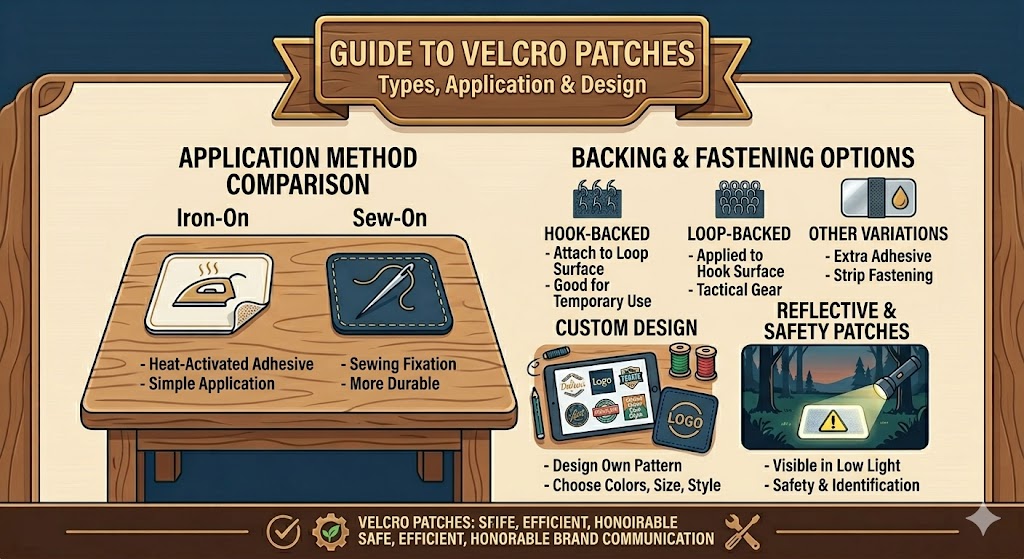
Iron-on patches have a heat-activated adhesive backing, allowing them to be applied by simply ironing them onto the fabric. Sew-on patches are sewn onto fabric and are often more durable than iron-on patches, especially for heavy-duty use.
Custom Velcro Patches: How to Create Your Own Design
Custom Velcro patches can be designed with logos, text, or artwork. Many manufacturers offer customizable patches where you can choose colors, sizes, and styles to create a unique design that suits your needs.
Different Velcro Backing Options: Hook, Loop, and Other Variations
Velcro patches come with various backing options such as:
- Hook-backed patches: These patches are designed to attach to loop surfaces and are great for temporary uses.
- Loop-backed patches: These patches are applied to hook surfaces, commonly seen in tactical gear and military uniforms.
- Other variations: Some patches come with additional adhesives or can be attached via Velcro strips.
Reflective Velcro Patches: Ideal for Safety and Visibility
Reflective Velcro patches are specifically designed to increase visibility in low-light environments. They are often used for safety purposes in workwear, uniforms, and outdoor gear.
4. How Are Velcro Patches Made?
The Materials Used for Embroidered Patches (Fabric, Thread, Backing)
Velcro patches are typically made using high-quality fabric, colored threads, and durable Velcro backing. Embroidered patches are often created by stitching thread into the fabric to form the design.
The Embroidery Process: How Machines Create Intricate Designs
The embroidery process involves stitching the chosen design onto the fabric using machines. The thread used for embroidery adds texture and depth to the patch, making it stand out.
The Difference Between Handcrafted and Machine Embroidered Patches
Handcrafted patches offer a more personalized, artisanal touch, while machine-embroidered patches are faster to produce and more consistent in appearance.
Why Quality Thread and Fabric Matter for Long-Lasting Patches
The quality of the thread and fabric used for the patch affects its durability and appearance. High-quality materials ensure that the patch lasts longer and maintains its vibrancy after repeated use and washing.
5. How to Apply a Velcro Patch?
Ironing on Velcro Patches: Step-by-Step Guide
Place the Velcro patch on the desired area. Cover the patch with a cloth to protect it from direct heat. Use an iron on medium heat for about 30-60 seconds. Allow the patch to cool and set before handling.
Sewing Velcro Patches: Tips for a Durable Application
To sew a Velcro patch, align it with the desired spot, and use a strong needle and thread to stitch the edges securely. Ensure the patch is well-attached to avoid it coming loose over time.
The Best Method for Attaching Velcro Patches to Different Fabrics
For delicate fabrics, ironing may be more suitable, while heavier fabrics or items may benefit from sewing to ensure durability.
How to Ensure a Strong Bond Between Velcro Patch and Fabric
Ensure that the fabric is clean and dry before applying the Velcro patch. Whether ironing or sewing, make sure that the Velcro is applied evenly for maximum adhesion.
6. How to Use and Install Velcro Patch
Uses and Applications of Velcro Patch
Velcro Patch is a commonly used patch in military, sports, uniforms, and other fields. Its main purpose is to provide a convenient and adjustable way to attach or remove patches. It offers a secure grip with a strong adhesive that holds well while also being easy to detach. This functionality makes it widely applied in various industries.
How to Choose the Right Size and Design for Velcro Patch
When selecting a Velcro Patch, make sure it fits the intended location and serves its purpose effectively. The size of the patch should match the surface area where it will be applied, ensuring visibility and usability. If the patch is for branding or identification, it should be large enough to be easily readable and make a clear statement.
Installation Tips for Velcro Patch
When installing a Velcro Patch, ensure that the surface area is clean and free from dust, as debris can weaken the adhesive. Make sure the patch is firmly pressed onto the surface to maintain a strong bond. Also, check that the backing of the Velcro patch is compatible with the surface it is being applied to, as different materials can affect the adhesion.
7. Common Issues with Velcro Patches and How to Solve Them
Why the Velcro Patch May Not Stick Properly and How to Fix It
If your Velcro Patch fails to stay in place, it may be due to dirt or dust on the surface or the patch itself. Clean both the surface and patch to ensure maximum adhesive power. Also, check for any signs of wear or damage to the Velcro, as worn patches can lose their effectiveness.
Choosing the Wrong Patch Leading to Attachment Failure
When choosing a Velcro Patch, ensure it is the right strength for the job. If the adhesive strength is too low, the patch may not hold properly. For areas with frequent use or heavy loads, it’s important to select a high-strength Velcro Patch.
Maintenance of Velcro Patch
To ensure the longevity of your Velcro Patch, keep the surface clean and free from debris. Regular cleaning will prevent dirt buildup, which can degrade the adhesive and reduce its effectiveness. You can also replace the patch if it becomes worn out or loses adhesion strength.
8. How to Improve the Durability of Velcro Patch?
Choosing the Right Material for Velcro Patch Based on the Environment
For outdoor or industrial use, choose a Velcro Patch made of durable materials that can withstand environmental factors like rain, snow, or high temperatures. High-quality materials ensure that the patch stays intact even in harsh conditions.
Avoid Excessive Pulling or Strong Attachments
Excessive pulling or heavy attachment can weaken the Velcro's adhesive. Avoid over-stretching or forcing the patch onto surfaces where it doesn't fit properly. Use the Velcro Patch within its intended limits to ensure maximum performance.
9. Checklist Before Choosing Velcro Patch
Understand Your Usage and Purpose
Before selecting a Velcro Patch, clarify the purpose and environment it will be used in. This will help you choose the right size, strength, and material.
Choose the Right Size and Strength
Based on the application, choose the correct size and strength for your Velcro Patch. Ensure it matches the usage environment and fits your requirements for durability and efficiency.
Check Material and Durability
Select a Velcro Patch material suitable for your environment, ensuring it will perform well and last longer in the intended conditions.
Verify Warranty and After-Sales Service
Ensure that the Velcro Patch comes with a warranty or guarantee, and check for after-sales service if the product fails or doesn't perform as expected.
Conclusion
Velcro Patch is a convenient and effective tool used across a variety of industries. Whether for military, sports, or everyday applications, selecting the right Velcro Patch ensures optimal performance and durability. With proper care, Velcro Patches can last for years, providing reliable and flexible solutions for a wide range of uses.
Frequently Asked Questions (FAQ)
Q1: What are the common uses of Velcro Patch?
A: Velcro Patch is commonly used in military, sports, uniforms, backpacks, and other applications to secure, decorate, or identify items. It offers flexibility and convenience for quick attachment and removal.
Q2: How do I install Velcro Patch?
A: When installing Velcro Patch, ensure that the surface is clean and free of dust, which could affect adhesion. Press the patch firmly onto the surface for a secure bond, and ensure that the Velcro backing is compatible with the material you are applying it to.
Q3: How do I maintain Velcro Patch?
A: Regularly clean the surface of the Velcro Patch to prevent dirt buildup. Keeping the Velcro clean will maintain its adhesive strength. If the Velcro becomes worn, it may need to be replaced.
Q4: How do I choose the right Velcro Patch?
A: When selecting a Velcro Patch, choose the right size and strength for the intended use. Consider the material, adhesive strength, and intended environment to ensure optimal performance.